
Reimagining Economic Opportunity
Economic insecurity remains one of the greatest barriers to upward mobility, financial stability, and civic participation in the United States. More than half of Americans lack the resources needed to fully participate in today’s economy, with women, low-income workers, and young people facing disproportionate challenges.
Consider:
- Over 50% of Americans live without economic security, according to a new comprehensive review of well-being by the Urban Institute, which measures costs families must meet to fully participate in today’s society.
- Women are still much more likely to face economic insecurity. Two-thirds of low-wage workers are women, often working 2-3 jobs to meet expenses. Women and children make up 70% of the nation’s poor.
Economic hardship not only limits opportunity—it increases vulnerability to violence, weakens family and community well-being, and can undermine civic engagement and trust in institutions.
The Center for Economic FUTURES advances economic solutions for low-income workers, women and youth, including survivors of domestic and sexual violence. Grounded in evidence, lived experience, and policy innovation, we identify barriers to employment and financial security and develop practical solutions that strengthen economic resilience, expand opportunity, and support a more inclusive democracy.
Our Work
Economic & Employment Security
We develop and advance policies, tools, and innovations that help workers access and retain quality employment, strengthen workplace protections, and build long-term financial security. This includes work on employment rights, paid leave, workplace equity, financial capability, and the future of work.
- Advancing Safety through Employment Rights. FUTURES increases access for women and survivors to critical employment protections by providing educational opportunities and tailored state-specific resources on paid sick and safe leave, reasonable accommodations, anti-discrimination protection, and unemployment benefits for survivors. This includes a soon-to-launch, groundbreaking AI tool that translates complex employment laws from all 50 states and territories into personalized, actionable guidance for survivors seeking to maintain economic independence.
- Women & AI in the Workplace. AI adoption in the workplace is accelerating faster than the safeguards meant to govern it. FUTURES is developing a private-sector engagement strategy to create a clear, actionable path for companies to adopt AI benchmarks built on FUTURES’ organizational best practices that strengthen retention, healthy cultures, and workplace safety.
Workplace Safety & Belonging
We partner with employers, workforce leaders, and policymakers to create workplaces that support employee well-being, retention, and productivity. Through research, technical assistance, and field leadership, we advance strategies that address workplace barriers, improve organizational culture, and support workers facing adversity.
- National Resource Center Workplaces Respond to Domestic and Sexual Violence. Workplaces Respond educates and equips employers, workers, unions, and advocates with the knowledge, tools, and best practices necessary to prevent and respond to the impacts of domestic violence, sexual assault, stalking, and sexual harassment (DVSASSH) in the world of work.
Workforce Systems Innovation
We work with public agencies, workforce boards, advocates, and employers to strengthen workforce systems and expand access to economic opportunity. Through national working groups, policy development, and regional demonstration projects, we identify scalable solutions that connect people to employment and economic mobility.
- Pathways to Opportunity seeks to address these barriers to economic independence through regional teams composed of a victim service organization, an education organization, and a workforce development organization. FUTURES has partnered with the Corporation for Skilled Workforce and Women Employed to train these regional collaboratives on how to help women gain and maintain employment.
Research, Narrative & Policy Change
Data and lived experience drive our work. We collect evidence and elevate worker and survivor voices to deepen understanding of economic insecurity and advance evidence-based solutions. Our work helps inform national conversations on workforce participation, women’s economic advancement, and an inclusive democracy.
- Uplifting the Economic Priorities of Women Workers. FUTURES is gathering data to explain how women workers view economic mobility today. From upskilling to accessing resources, FUTURES seeks to share the challenges, gaps, and opportunities women face in traditional employment pathways across the United States to meet their economic needs and aspirations.
- Telling Stories of Economic Trauma and Resilience. The experiences of low-income workers, survivors, women, and youth guide our work. FUTURES uplifts stories (link to Warmline) that reframe our understanding of economic barriers, especially those that affect a low-wage worker’s ability to seek, obtain, and maintain employment.
- Workforce Working Group Addressing DVSASSH. This group works to build guidelines on addressing domestic violence, sexual assault, stalking, and sexual harassment in the workforce system. Please click to join and receive updates.
- Economic Security for Survivors of Domestic and Sexual Assault Working Group. This group works to advance economic security of survivors. and published guidelines for cash assistance programs for survivors of domestic and sexual assault. Please click to join and receive updates.
- Safe Leave Working Group. This group worked to develop model legislative policy and documentation and confidentiality rules for the development of paid, safe leave. FUTURES recently published an updated fact sheet on why Working Survivors need Paid Leave. Please click to join and receive updates.
Connect With Us
To learn more about the Center for Economic FUTURES, partnership opportunities, or current initiatives, contact econ@futureswithoutviolence.org.

The Intersection of Work and Abuse
In this report, we break down the data from our 2025 survey of more than 2,000 people. We asked survivors questions about their experience in the workplace. From the data, we learned more about what contributes to insecure employment for survivors and how their employers could better support them.

Women & AI in the Workplace Virtual Event
In this recorded webinar, “Women, AI and the Workplace: A Strategy for Economic Opportunity,” we discuss how AI could open new paths to economic growth and inclusion.

Trauma-Informed Toolkit for Youth-Serving Staff
This Trauma-Responsive Organizational Toolkit is co-designed by Futures Without Violence and Greenleaf Integrative. It is a starting point for organizations working with youth to identify and respond to the impact of trauma across the organization – youth receiving services, staff supporting youth, teams and the organization itself.

Action Guide to End Teen Economic Abuse
This action kit equips adults with tools to support teens experiencing economic abuse. Using the CUES intervention approach, it emphasizes creating safe, confidential spaces, providing universal education about healthy financial behaviors, and offering non-judgmental support. The kit encourages early intervention, open conversations about financial safety in relationships, and youth-led awareness activities to help prevent and address economic abuse.
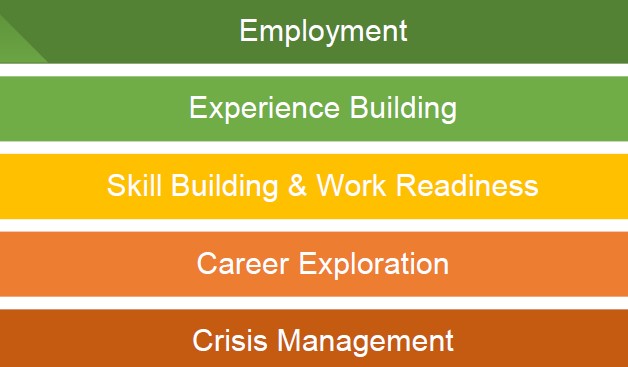
Five Tiers of Economic Empowerment
For victim service agencies, this resource will help you develop programming that can empower survivors economically.