

FUTURES Has Expanded Team: Changing Minds Into Middle and High Schools to Support Youth Mental health
By Moira McLaughlin
May 20, 2026
In a recent CDC report, almost 2 in 5 teens said that they are not receiving the social and emotional support that they need to do well.
Young people, especially boys, are struggling with loneliness, isolation, and a feeling that no one really knows them. This can lead to depression, disengagement, and even violence against others or themselves, and it can take years for men and boys to access the help they need.
What can we do to strengthen mental health supports for young men and boys and get them the help they need sooner? One solution: change who help comes from, so it is embedded in spaces where boys already are.
May is Mental Health Awareness Month, and FUTURES is working to help combat the worsening youth mental health crisis. And you can, too.
Trusted Adults
When boys and young men have a trusted adult in their lives, they are more likely to seek help to address their mental health challenges. That’s where Team: Changing Minds comes in. It’s an initiative that reimagines who can help identify, understand, and respond to a young person who may be struggling with mental health by training trusted adults to support youth mental health.
We implement Team: Changing Minds in a variety of ways. One way is through schools and partnering with middle and high school athletic coaches. Since about half of kids play sports, coaches can easily serve as those trusted adults to their athletes.
“Young people want help, but too often don’t know how or feel confident enough to ask,” said Brian O’Connor, FUTURES vice president and founder of Team: Changing Minds. “By enlisting athletic coaches to be an early support for what they see both on and off the field, we’re expanding the constellation of caring adults who have the ability to help boys sooner – before a potential crisis occurs.”
From “Trusted Adults” to “Everyday Responder”
From long bus rides to tournaments to pre-season practices, coaches spend a lot of time with their team, which affords a lot of opportunity for easy connection and conversation. But an Aspen Institute survey found that only 18% of coaches felt comfortable in their ability to help connect athletes to mental health resources.
Team: Changing Minds gives coaches the tools they need to feel confident talking about mental health. Coaches receive training that:
- Teaches them how to facilitate FUTURES’ school-based curriculum on emotional and social well-being
- Equips them to become “Everyday Responders,” who understand mental health, see the warning signs, communicate with the young men, and connect them to the help they need
Once trained, coaches hold a series of 15-minute conversations with their student-athletes over the course of 12 weeks, during the athletic season. Topics include:
- Respect & Personal Responsibility
- Mental Health Matters
- Insulting Language
- Disrespectful Behavior Towards Women & Girls
- Understanding Consent
- When Anger & Aggression Cross the Line
- Conflict & Communication
Building Trust with Players
The Everyday Responder training also helps coaches create connection and belonging with their athletes. It includes everyday gestures for coaches that help to build trust in their athletes so they can have authentic conversations about mental health.
“Growing up in the 80s and 90s, especially as an athlete, there was always a stigma that you didn’t talk about [mental health]. You had to be tough,” said Coach Olando R. Dulin, from Southwest Pennsylvania Area Schools, who is trained as an Everyday Responder.
“This generation has found a way to do away with that stigma and open up more, especially once they trust individuals. That’s the most important thing is building that trust with your student-athletes and allowing them to be comfortable with who they are and free to have those conversations with you. Once that trust is built, it’s a little easier to have those extensive conversations about what they might be feeling and the tough things going on in their lives,” Dulin said.
Activities for Mental Well-being
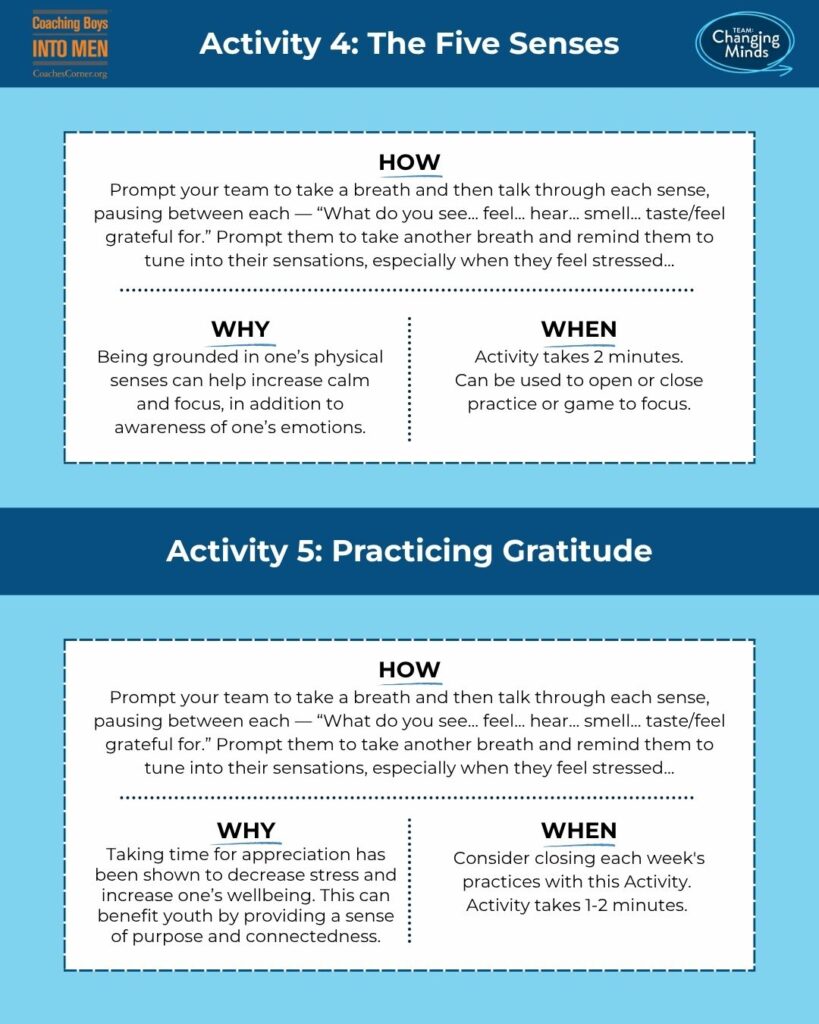
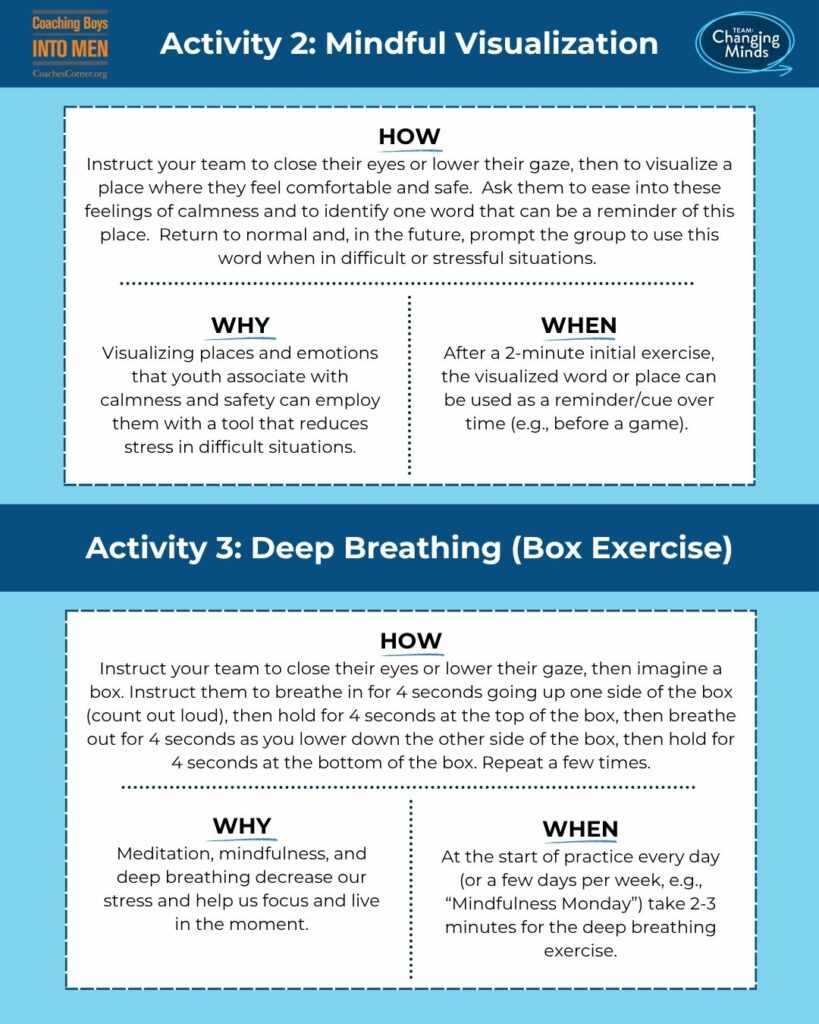
Right-click the images below to save them on your device.
When Coach Dulin heard that many players on his team were going to a one-dollar wing restaurant every Wednesday night, he decided to go too and use that time to talk about mental health with the whole team. “They were comfortable because those were their brothers, and they trusted their brothers with their words, and we started having these difficult conversations about mental health. I think a lot of the young men learned a lot. To the point where some of them have become advocates themselves. If they notice something’s going on [with a teammate], they feel comfortable coming to the coaches. Once you start building that trust with your players, you’ll find those leaders.” Data shows that Team: Changing Minds is working, too. Some 95% of the 81,000 trained Everyday Responders now feel equipped to share mental health resources. “I just appreciate the coaches for being there,” said one of Coach Dulin’s student-athletes. “During practice, [the coaches will] pull you aside if they see anything [that might indicate] that something’s wrong and ask you if you need anything.” Coaches are often already the trusted adult in a kid’s life. Team: Changing Minds utilizes that trust to interrupt mental health challenges so young men and boys get the help they need now. But the training is available to any adult who is seeking to become better equipped to support young people’s mental health. To become trained as an everyday responder, go the Team: Changing Minds website. For young men and future dads across America, this video spotlights the joy and hope that “everyday actions” can foster in helping to facilitate healing and connection where young people live, play, and learn. This tip sheet helps parents, caregivers, mentors, and other adults support the mental health of youth who game by understanding both the benefits and risks of gaming. It offers guidance on recognizing warning signs of harm, starting compassionate conversations, and responding in ways that promote healthy coping, connection, and emotional well-being. This resource supports mentors, parents, educators, and coaches in understanding how looksmaxxing content shapes boys’ body image and ideas about masculinity. It offers tools, discussion guides, and practical strategies to help youth build confidence grounded in values rather than appearance.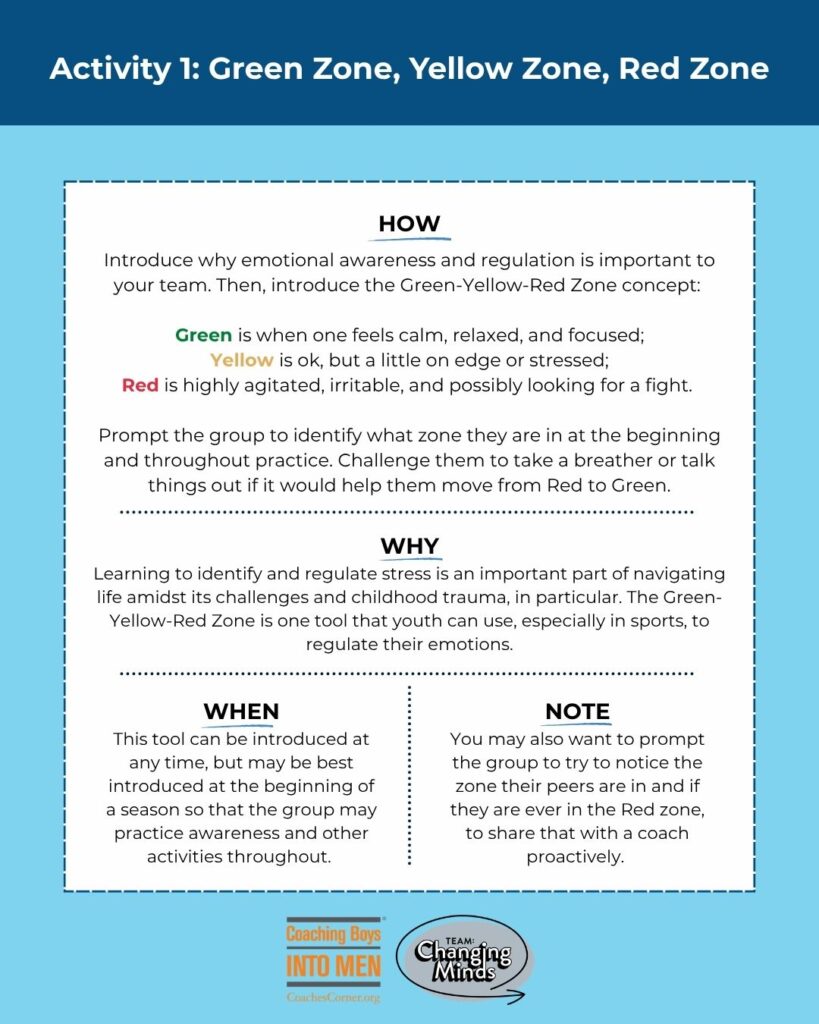
Building Trust Within the Team
Get Involved
You can also learn more about our work with athletic coaches on our Coaching Boys into Men website.
Dads Get Serious About Mental Health
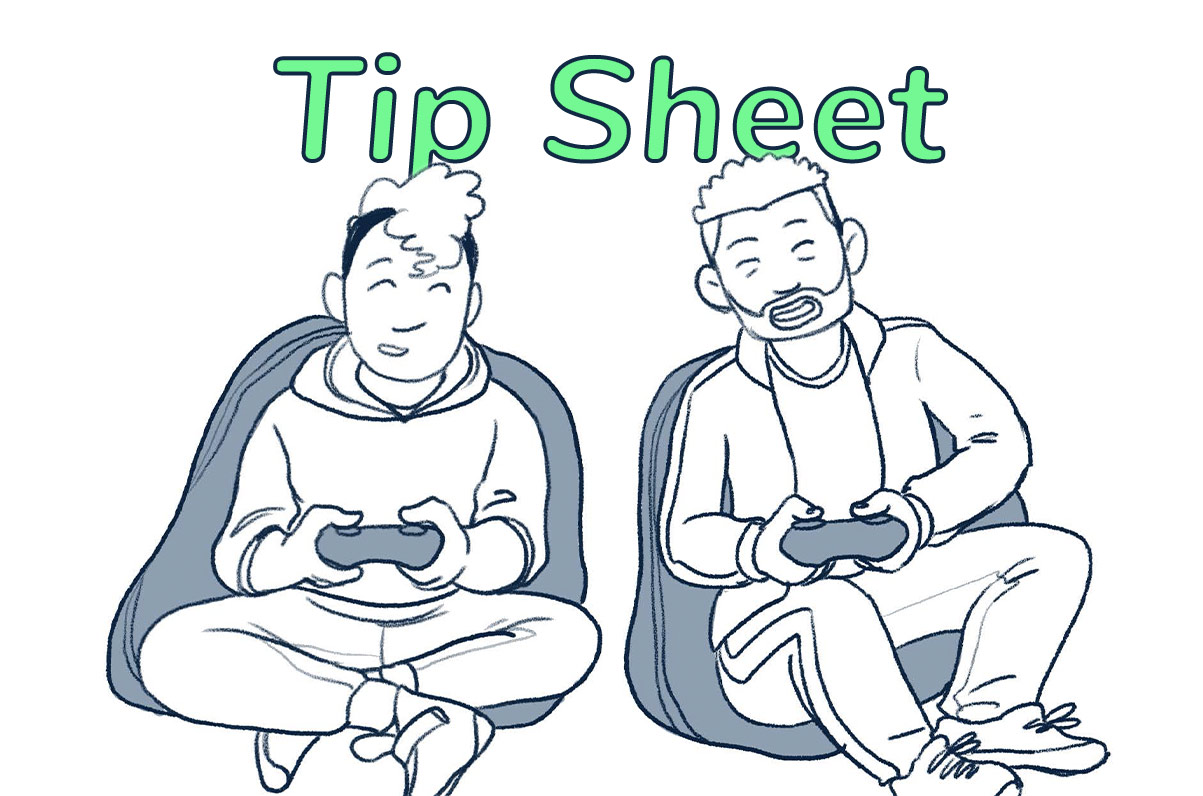
How to Support Youth Mental Health in Gaming Spaces: What to Know

Boys’ Body Image and Online Exposure