

June 15th is World Elder Abuse Awareness Day. FLOURISH Protective Factors Can Help End Elder Abuse.
By Jennifer L. White, Esq.
Vice President, Learning & Leadership
June 11, 2026
June 15 is World Elder Abuse Awareness Day, an opportunity to consider how we can collectively build the conditions that help older people flourish as individuals, in their families, and in their communities.
Since 2008, FUTURES has been offering elder abuse education to courts, deepening judges’ understanding of what elder abuse is and what it can look like. Through the years, we observed misguided assumptions both about older people who cause harm and experience harm:
- older people who cause harm were considered less dangerous than younger people committing the same acts,
- older victims’ capacity was often questioned automatically, as if to explain why they were in an abusive relationship, and
- abuse happens when caregivers feel overburdened, even though research concludes that a person harming an older family member is often reliant on the older person for housing, food, or other economic support (Storey, J.E. 2020).
These assumptions still exist, embedded in our institutions, policies, and services available to older people. However, a lot has changed about how we think about violence and elder abuse, and that’s a good thing.
FLOURISH Protective Factors
When we first began, we thought that if we identified the problem and came up with a response within the legal system, we could end elder abuse. What we realized with the help of advocates, health care professionals, service providers, researchers, and older people themselves is that safety is not just the absence of abuse.
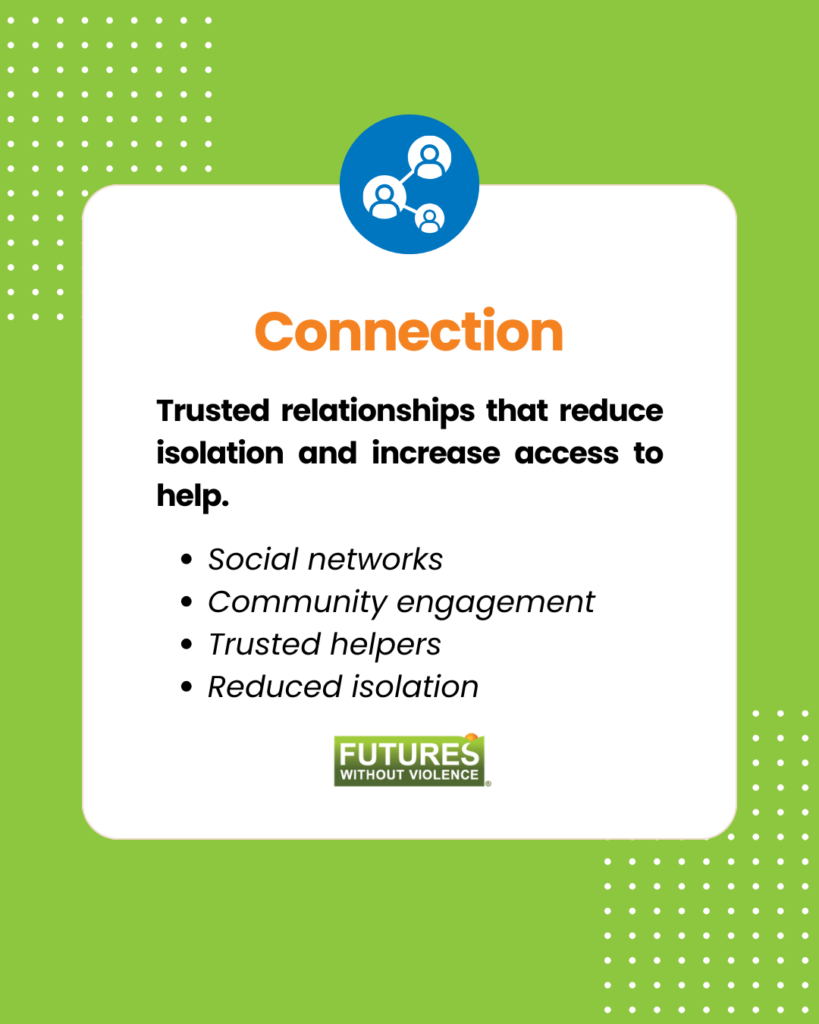
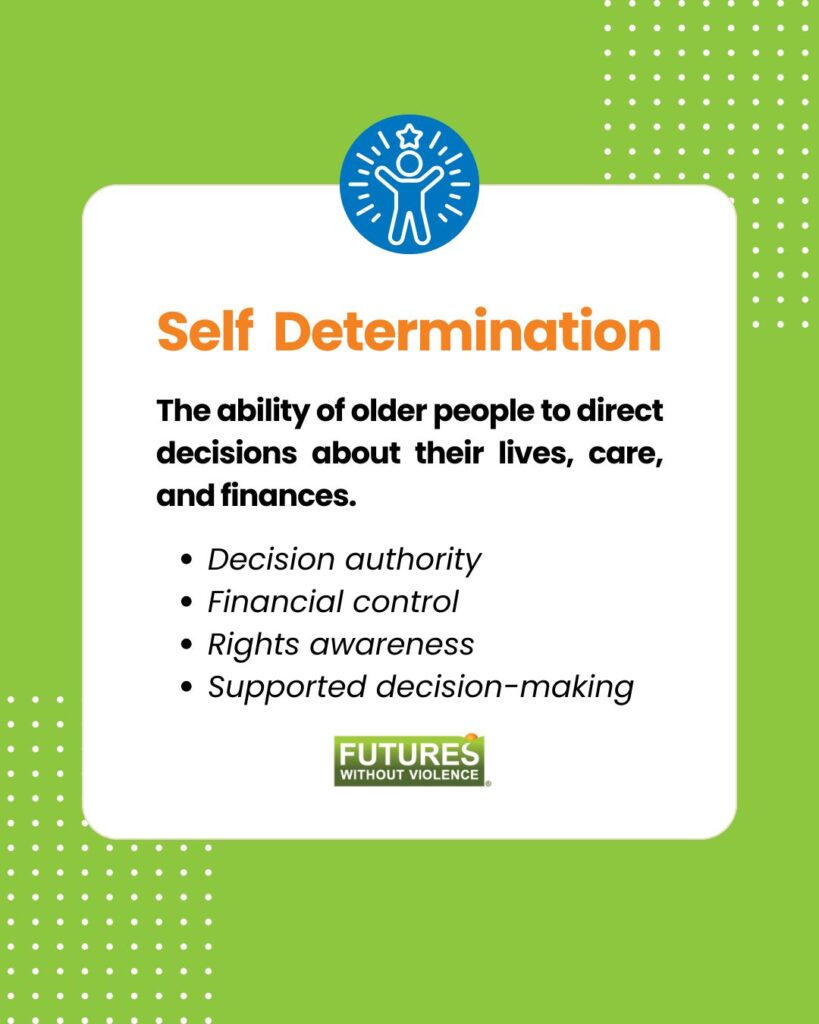
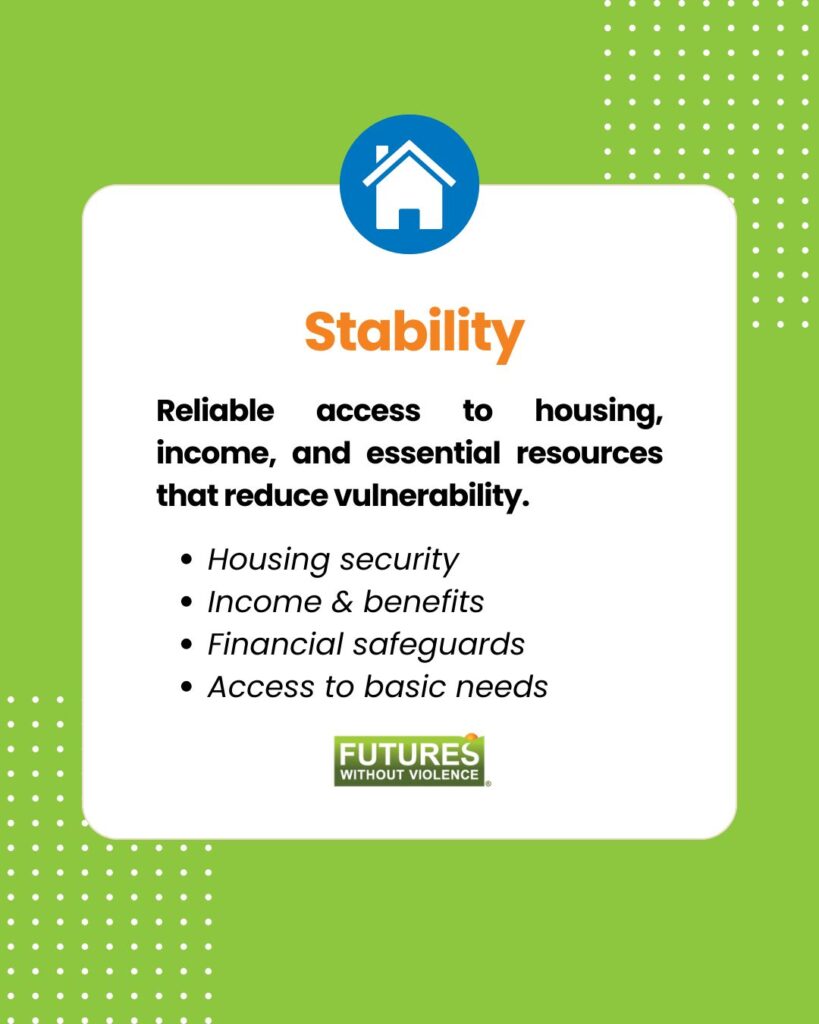
Safety, rather, comes when older people have connection, self-determination, stability, support, and the opportunity for healing. We call these the FLOURISH factors:
- connection to other people that is meaningful, supportive, and safe,
- self-determination or the right to choose what help you need or want,
- stability that looks like safe housing and access to food and medical care,
- support, and
- resilience and healing, which can help lead to connection, stability, support, and self-determination, and recreate the very conditions that make future safety possible.
The importance of the FLOURISH factors became clear during the isolation of the COVID-19 pandemic, when more than one in five older adults reported experiencing elder abuse — an estimated 83.6% increase over pre-pandemic prevalence.
Social Media Toolkit
Right-click the images below to save them on your device for posting to social media.
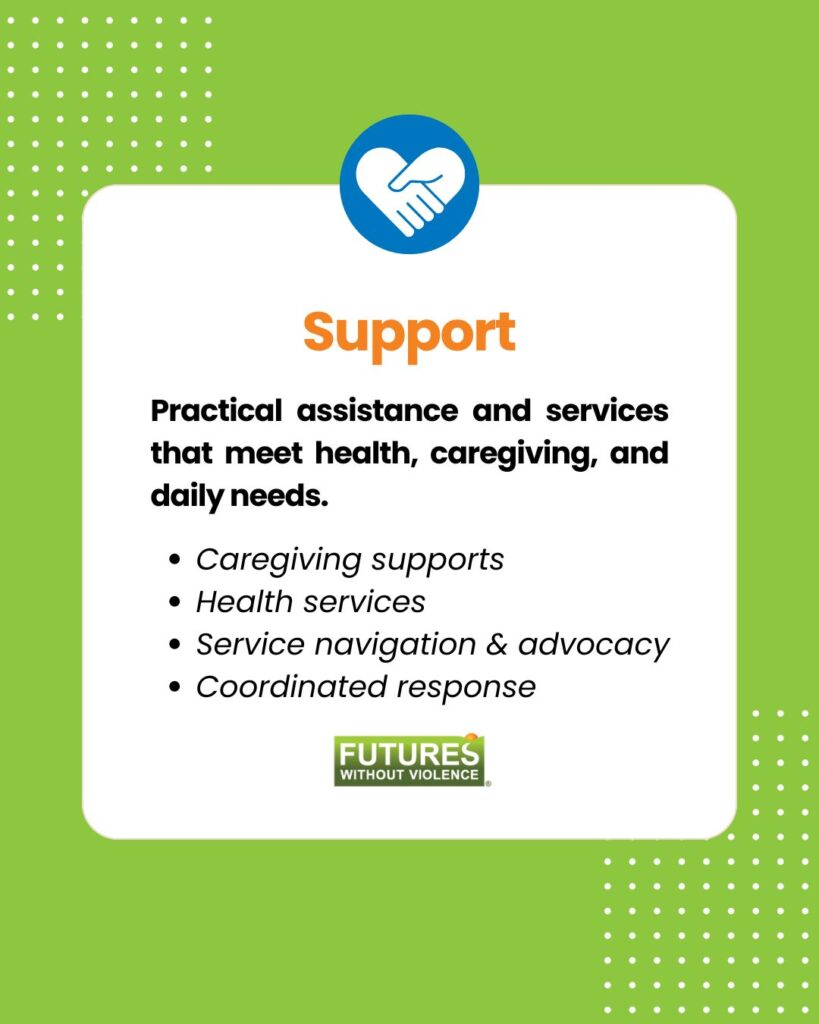
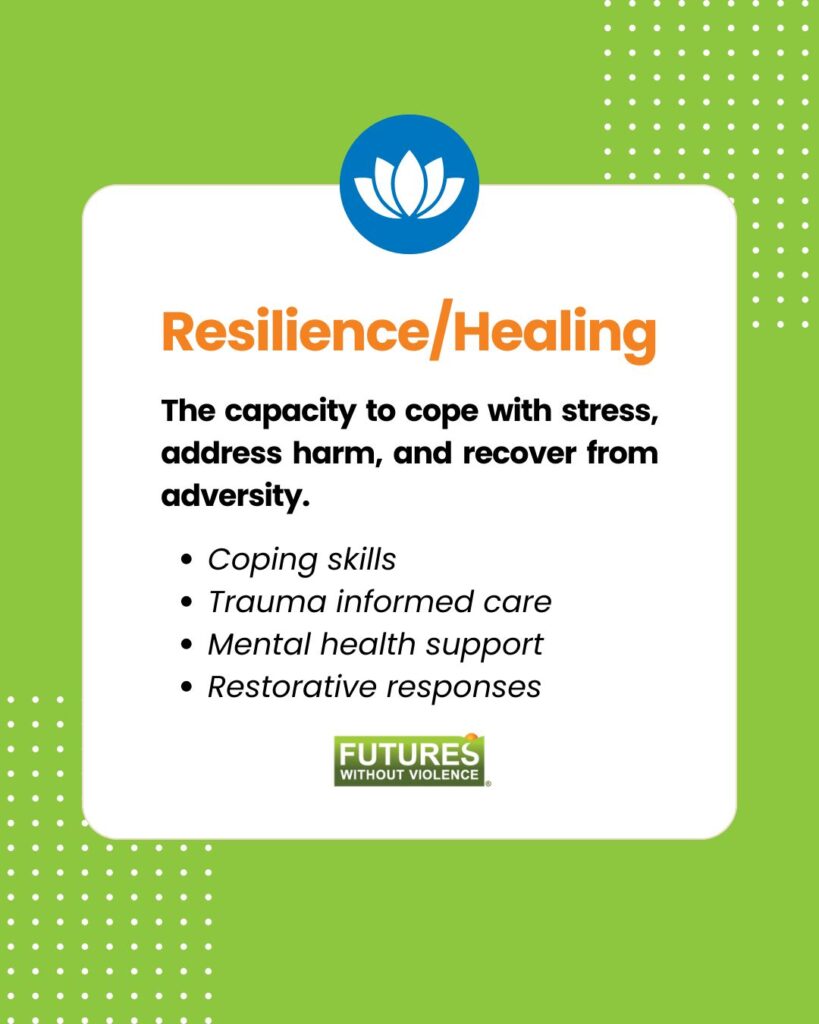
Services That Will Help Older People FLOURISH
In 2010, FUTURES led a project called STAGES that builds collaborations between courts and communities to prevent financial exploitation. We surveyed judges to ask what they saw as their biggest obstacle to helping older people. Overwhelmingly, the responses were the lack of services available for older victims.
Even if the services exist, older people only want them if they feel their choices, values, and priorities will be honored and respected. Oftentimes, they may choose to confide in a trusted friend, a religious leader, or other informal support before engaging formal systems, such as law enforcement. Research shows that many older people seek law enforcement only when they have run out of other options (Dominguez, S. F., Storey, J. E., & Glorney, E. (2021).
None of the FLOURISH protective factors is completely separate from one another. They are interconnected, and each serves an important purpose in helping older people live free from abuse and to heal after harm occurs.
After two decades of working to prevent abuse in later life, we understand that preventing harm is only part of the story. We need services that support older people so they can be safe and thrive. Our current research seeks to better understand and test the FLOURISH factors and their relationship to safety, well-being, and resilience in later life and help create futures without violence for older people.