
Your Teen Is Listening. Talk About Healthy Relationships
By Moira McLaughlin
February 13, 2026
Parents experience a range of emotions watching their children grow, from joy and pride to anxiety. A 2024 Gallup survey found that 8 out of 10 parents often worry about at least one part of their child’s life, from their mental health to their physical safety, and everything in between.
For most parents of teens, this is probably a pretty obvious data point. You know too well that parenting teens brings some anxiety: Is my child safe? Happy? Confident?
Coupled with worry is also parental discomfort with talking to their kids about challenging topics like their romantic relationships or feelings, and 4 out of 10 parents say it’s not easy.
February is Teen Dating Violence Awareness Month. While adding another worry might not be on your to-do list, you might consider this month an opportunity to talk with your teen, or if you’re up for it, your child’s friend group about healthy dating and help prevent teen dating violence.
What is Teen Dating Violence?
Dating violence, like domestic violence, is about power and control, and a partner can assert that control in different ways: through physical, psychological, economic, or sexual abuse, harassment, or stalking. About 1 in 12 teens experience physical violence in their romantic relationship, and 1 in 10 experience sexual violence.
Some forms of dating abuse may be less obvious:
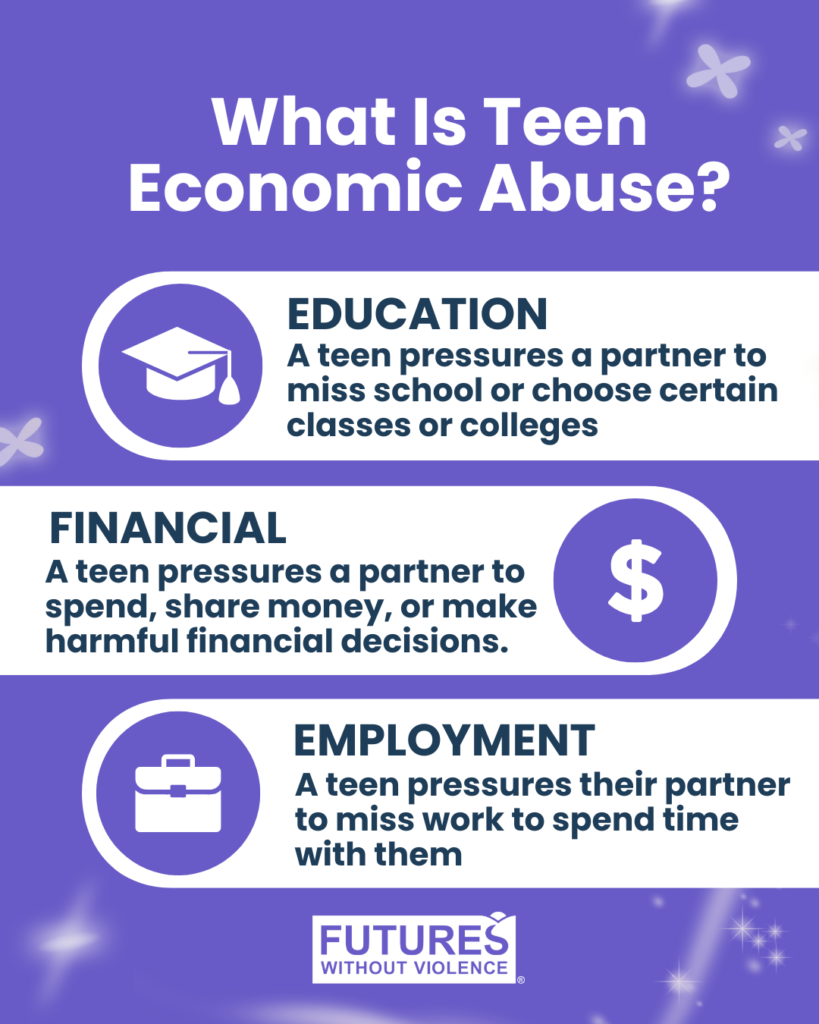
- Teen economic abuse involves the use of financial control to create dependency and block pathways to safety and well-being. This can look like a partner pressuring your teen to spend money, quit their job, skip class, miss after-school activities, or limit their access to their phone, car, or anything that enables independence.
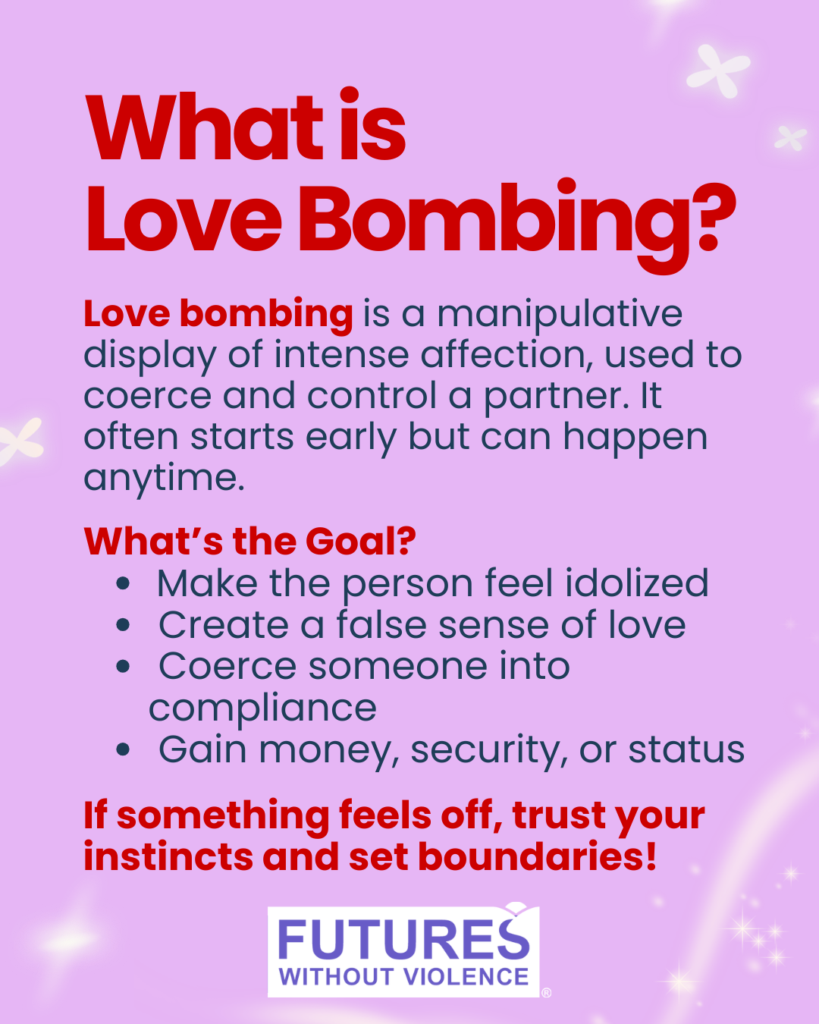
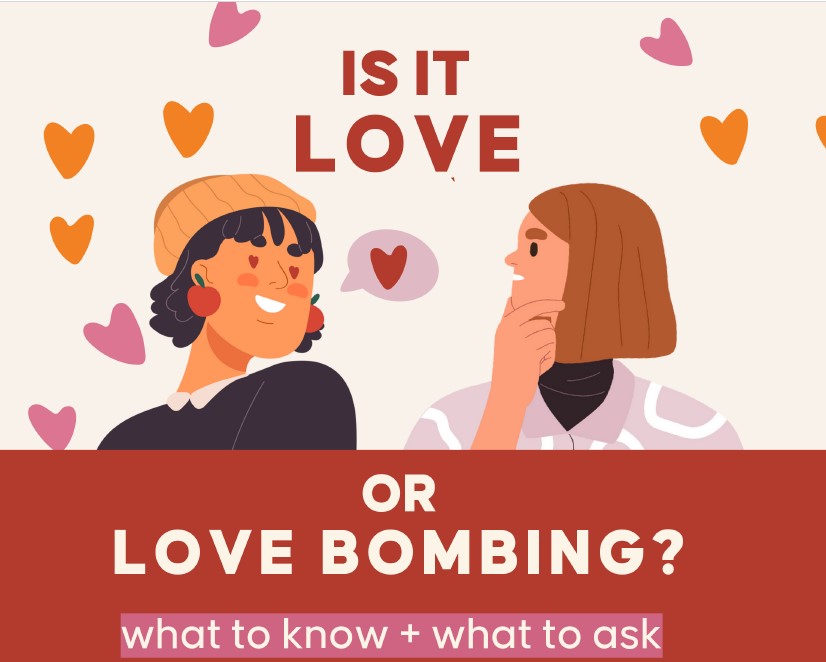
- Love bombing is a pattern of behavior involving targeted demonstrations of affection and excessive attention. This can look like a partner giving your teen a lot of gifts or making a big show of their affections.
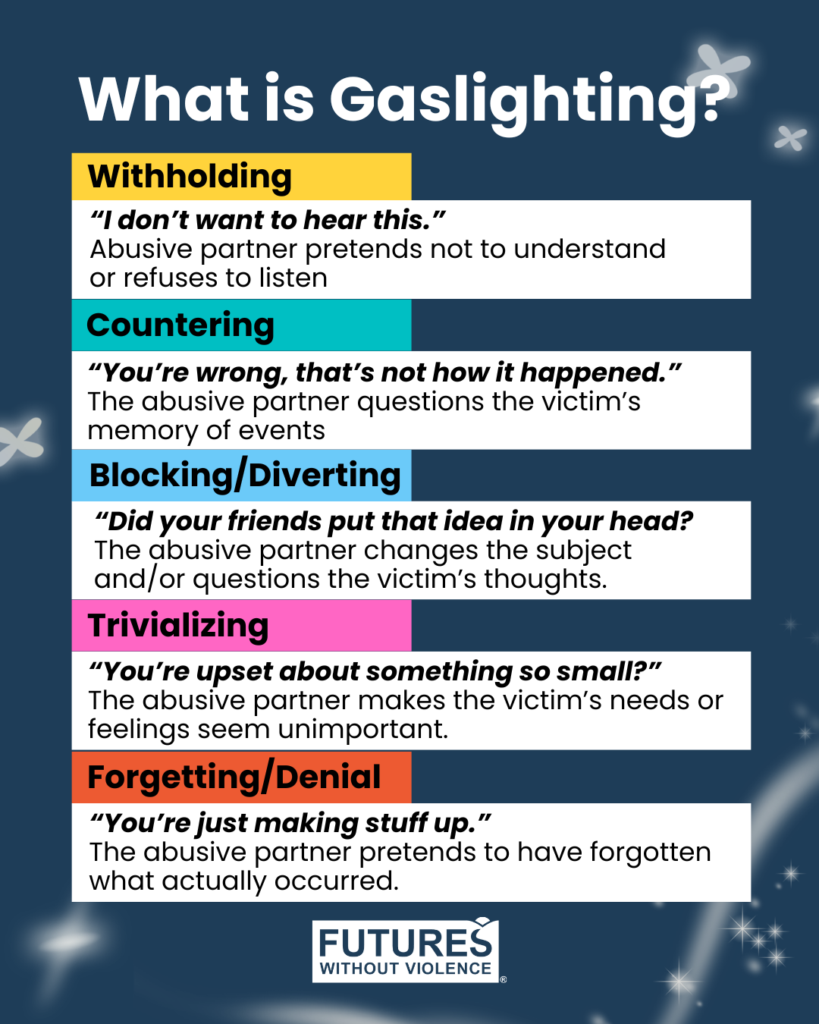
- Gaslighting is emotional abuse that causes someone to question their thoughts or feelings.
Talk to Your Kid
Lonna Davis leads FUTURES’ Children & Youth Team and has decades of experience working with families. She’s also a parent herself. Talking to your teen or pre-teen about dating is important, she says, just don’t lead with that.
“You don’t start the conversation with dating,” she says. “You start the conversation with telling your kid how important they are and how valuable they are. At each stage of their development, you reinforce that they’re in control of their bodies and their dreams. You instill in them the awareness that it’s up to them to decide who to be friends with, and you remind them that kindness and respect are family values.”
Instilling messages of self-worth in your kids will give them the confidence they need to trust their gut, use their voice, and get help when they need it.
“A parent’s message is you are special, and you know yourself better than anyone,” Davis says. “Teaching your kids relationship intelligence starts with their own emotional intelligence. How do they see themselves? How do they respect themselves and others and understand agency and autonomy? This emotional intelligence will translate into relationships.”
Davis wants to assure parents that their kids are listening despite the eye rolls and shoulder shrugs. In fact, the Gallup survey also found that 80 percent of Generation Z said that it’s helpful when their parents talk to them about their lives.
“I want to give parents the hope and the belief from experience that your kids are listening even if it seems like they aren’t,” she says. And just keep talking, wherever you are. “You want to take advantage of those times you’re together, but you’re not staring at each other, like during car rides.”
Middle school is when parents should start these conversations, “when they start thinking about different kinds of romantic relationships,” Davis says, “and their brains are positioned to learn things. Just don’t expect them to make eye contact with you.”
Model Healthy Relationships
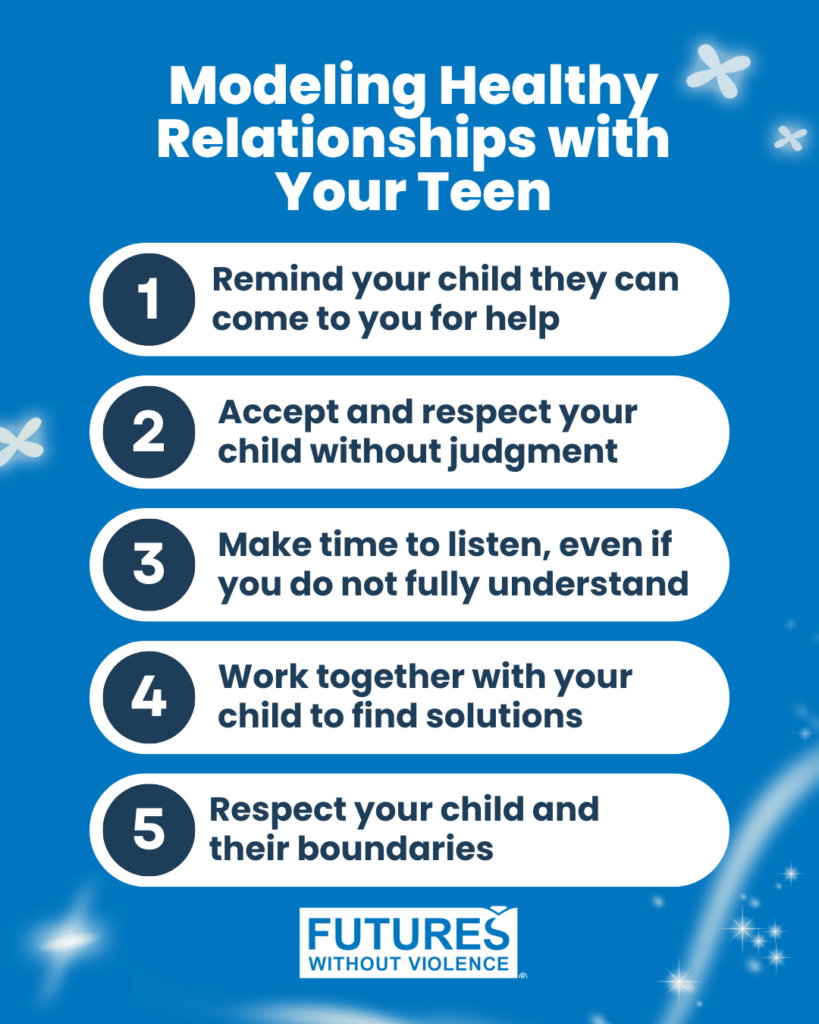
Mie Fukuda, also on the Children & Youth team, has worked as a child advocate and seen how instrumental a healthy child-parent relationship can be. Modeling a healthy relationship with your child is “foundational for future intimate partner relationships,” she says. Create that healthy relationship, Fukuda says, by:
- Making sure your child knows that if they need help or if they have questions, they can come to you
- Accepting and respecting your child, without judgment
- Taking time to listen to your child, especially if they are in a relationship that you don’t understand
- Reaching solutions together
- Respecting your child’s boundaries
Modeling positive behavior matters. “You can’t control your child’s life,” Fukuda says, “but you can control the messages you send by creating a loving and nurturing environment.”
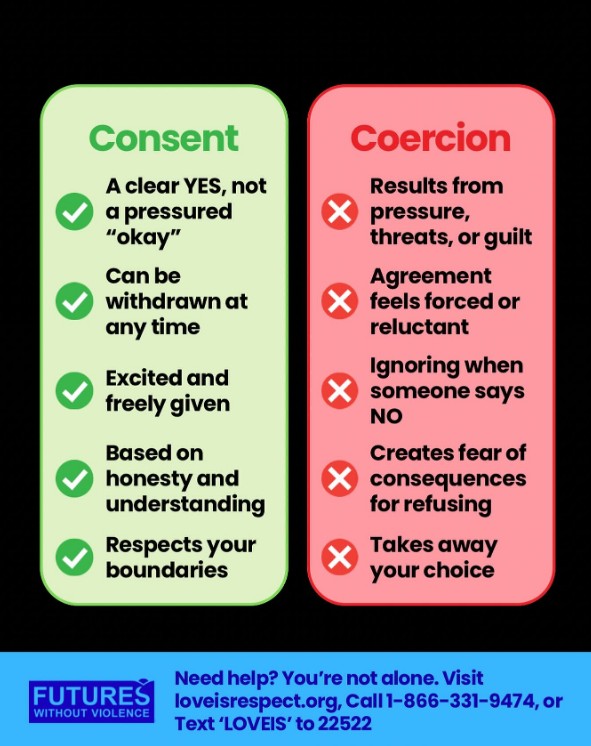
If you are concerned your teen is experiencing dating violence, contact the Love is Respect hotline at 1-866-331-9474 or text “LOVEIS” to 22522 for support.
Social Media Toolkit
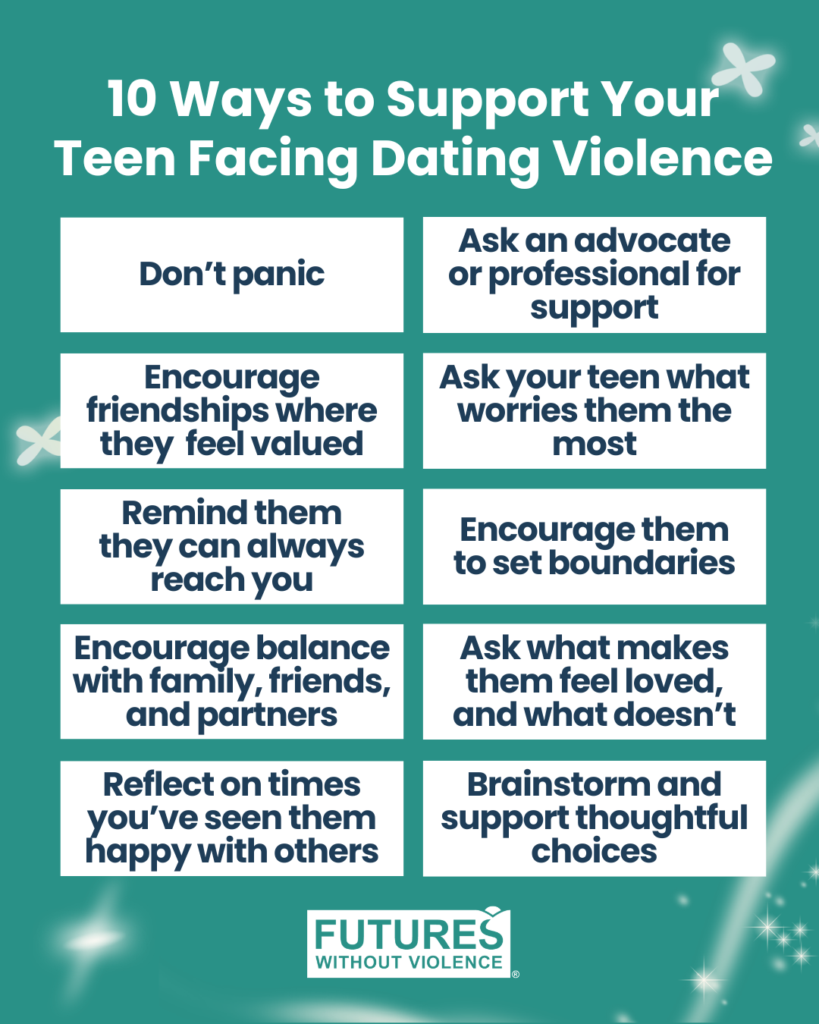
Right-click the images below to save them on your device for posting to social media.